 Philip Fisher was born in 1907 in San Francisco, California. In 1958, Fisher wrote Common Stocks and Uncommon Profits. The book turned out to be the first investment book ever to make The New York Times bestseller list. It also became required reading in the investments class at Stanford’s Graduate School of Business… the college that Fisher had dropped out of in 1928 to take a job as a securities analyst!
Warren Buffett met Fisher at a young age he later claimed that he has used a good deal of Fisher’s methods into his own stock selection process. Closer home, many of the Dalal Street Wizards have been using the Philip Fisher methodology.
So, what is Philip Fisher methodology?
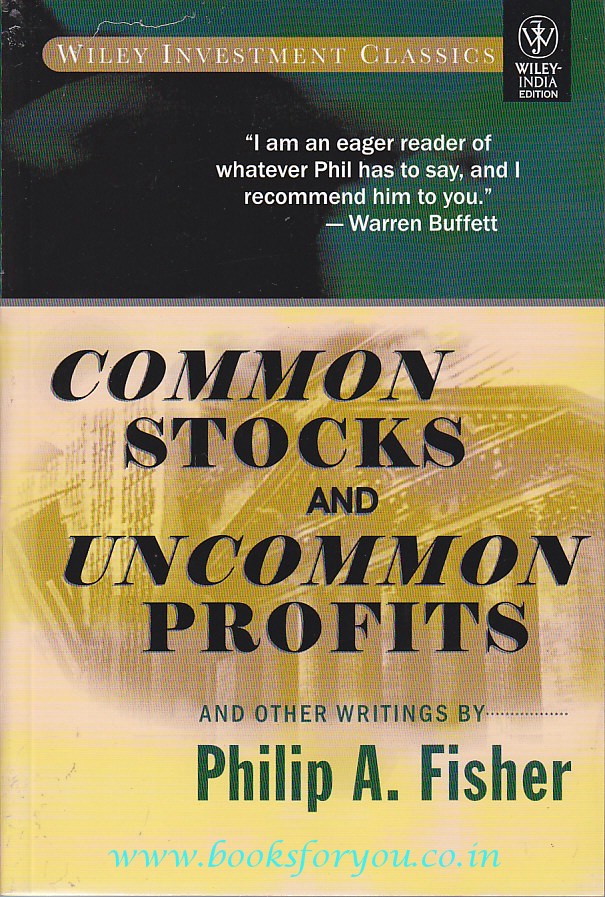 The concept is very simple. “Purchase and hold for the long term a concentrated portfolio of outstanding companies with compelling growth prospects”
And how long is the long term?
In Philip Fisher’s own words “If the job has been correctly done when a stock is purchased, the time to sell it is — almost never.”
Does this work in India?
We conducted a simple 3 step exercise to figure out if this works:
Step 1: We divided all the companies based on QUALITY Parameter 5 years ago. Our Quality parameter uses multiple Factors like Growth, Efficiency and Capital Structure over the long term and some basic Hygiene factors to rate the companies. We Rank the companies as Green, Yellow or Red whenever we have sufficient data available and they have a Market Cap > Rs.100 cr. Thus we constructed 3 Portfolios. Companies with Green Quality, those with Yellow Quality and finally those with Red Quality. Out of 3500 companies, 272 qualified as Green Quality.
Step 2: To identify companies with “compelling growth prospects” one needs to be able to forecast the future.But as Legendary Danish Physicist Neils Bohr humorously said “it is very difficult to predict — especially the future.” Also, Warren Buffet said : “Forecasts may tell you a great deal about the forecaster; they tell you nothing about the future.” Given this difficulty, we made a simple assumption that the past performance is the best guess of the future. Thus given that long term profitable growth is one of our Quality parameter, these Green Quality companies can be assumed to be the ones who have “compelling growth prospects”. This could be more true in India as the economy is still a nascent growth economy and most industries are in a growth phase and not in a mature phase.
Step 3: For holding these companies over the long term we assumed that we bought these companies 5 years ago and held it till now. We did not look at Valuations or the Financial trend. We created a market cap weighted portfolio for each of these categories.
So how do the results look like?
| Returns (CAGR) | 1 Year | 3 Year | 5 Year |
| BSE 500 | 18.9% | 8.4% | 14.5% |
| Green Quality | 21% | 11.2% | 18.1% |
| Yellow Quality | 16.4% | 6.9% | 12.7% |
| Red Quality | 7.2% | 1.5% | 2.6% |
The results are pretty clear. This Philip Fisher Strategy of Buying and Holding Good Quality stocks has worked well. The stocks which were rated Green Quality 5 years ago have not only outperformed the broader market but all other Quality Categories. This result also shows that Quality Matters! More on this in some other piece.
The most difficult part of a strategy like this is that Buy & Hold is an extremely difficult strategy to follow as the temptation to sell when stocks fall or go up too fast is extremely high.
So, how can we replicate this strategy today?
If you are a buy and hold investor and believe in the Philip Fisher approach, I have made a list of companies which qualify based on our methodology.
I have gone one step ahead and taken only that Small group of companies that our framework rates as “EXCELLENT”.
Philip Fisher believed that one should not hold more than 30 companies. Out of ALL the listed companies, only 27 companies which qualify as Excellent Quality and also have a Market Cap of Rs. 5000 cr or higher (in other words they have to qualify at least as a Mid Cap). We have not looked at Small Cap and Micro Caps in this list. This is a diversified list of companies across various Sectors:
| Company | Mkt Cap (Rs. Cr) | Segment |
| HDFC Bank | 4,82,383 | Mega Cap |
| HDFC | 2,95,869 | Mega Cap |
| Maruti Suzuki | 2,63,897 | Mega Cap |
| Kotak Mahindra Bank | 1,99,579 | Mega Cap |
| HCL Technologies | 1,28,639 | Mega Cap |
| Asian Paints | 1,07,488 | Mega Cap |
| IndusInd Bank | 96,999 | Mega Cap |
| Bajaj Finance | 92,721 | Mega Cap |
| Eicher Motors | 74,283 | Mega Cap |
| Yes Bank | 70,645 | Mega Cap |
| Tech Mahindra | 57,660 | Large Cap |
| Britannia Industries | 57,015 | Large Cap |
| Pidilite Industries | 45,886 | Large Cap |
| Procter & Gamble | 30,147 | Large Cap |
| Page Industries | 25,333 | Large Cap |
| Gillette India | 21,979 | Large Cap |
| Castrol India | 18,853 | Mid Cap |
| Whirlpool | 18,091 | Mid Cap |
| Exide Industries | 17,935 | Mid Cap |
| Jubilant FoodWorks | 13,164 | Mid Cap |
| Abbott India | 12,038 | Mid Cap |
| Symphony | 11,880 | Mid Cap |
| Mindtree | 11,770 | Mid Cap |
| Sanofi India | 11,127 | Mid Cap |
| Thomas Cook | 8,466 | Mid Cap |
| Johnson Controls | 6,202 | Mid Cap |
| Tata Elxsi | 6,185 | Mid Cap |
You can use this as a starting point to do further research. But please do remember if you would like to test your luck buy a stock, if you want to Invest buy a portfolio. Happy Investing!
Note: You can do a lot more research on each of these stocks on our site at https://www.marketsmojo.com/mojo/search

Sanjeev Mohta
Market Expert
Sanjeev Mohta is the Market Expert at Marketsmojo. He has over 27 years’ experience in Investment Research and Fund management across Asian Markets and Asset classes. He has worked in various organisations in Singapore and India like Alchemy, QVT, Jefferies, ABN Amro and HSBC Securities. He Has a PhD in Economics from Tulane University, USA.